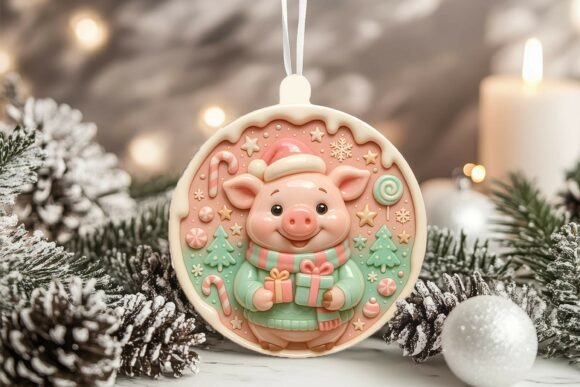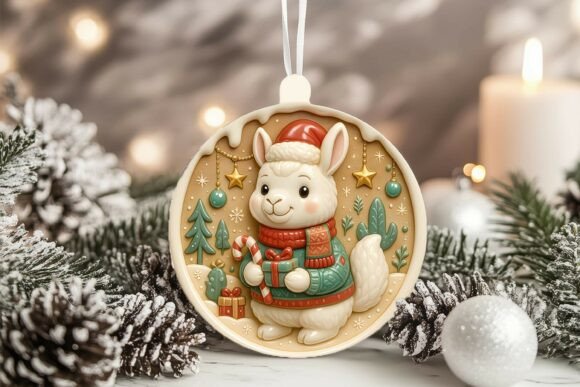
3D Porcelain Capybara Christmas Ornament Graphics and Illustrations
When a client approaches me with a request for a seasonal campaign that balances whimsy with high-end aesthetic appeal, my first instinct is to look for assets that feel tactile rather than purely digital. Recently, I evaluated a specific design asset for a boutique handmade brand launching a limited-edition holiday collection: the 3D Porcelain Capybara Christmas Ornament. This piece, available as a PNG design file, immediately caught my attention not just for its subject matter, but for how it bridges the gap between playful internet culture and sophisticated modern design.
The visual mood of this asset is distinct. It captures the serene, almost stoic expression of a capybara rendered in a style that mimics glazed porcelain. This creates an immediate sense of premium quality. For a small business branding project or an Etsy product launch, this level of detail signals to the customer that the final physical product will be equally refined. It moves away from the cartoonish tropes often seen in generic holiday marketing visuals and lands squarely in the realm of editorial design and lifestyle branding.
Visual Impact and Brand Identity Integration
In the context of brand identity, this asset serves as a powerful focal point. The 3D rendering provides depth and shadow that flat illustrations often lack, allowing it to sit naturally within complex compositions. When integrating this into a logo design or a hero graphic for a website, the circular ornament shape offers a contained, balanced element that is easy to align with typography. It works exceptionally well when paired with serif fonts, which complement the classic porcelain texture, or elegant script fonts that echo the handcrafted nature of the subject.
For content creators and bloggers preparing holiday content, this illustration adds emotional appeal without overwhelming the message. The capybara’s calm demeanor resonates with audiences seeking comfort during the busy holiday season. By using this as a supporting brand element, designers can create a cohesive narrative that feels both trendy and timeless. It is particularly effective for social media graphics where the goal is to stop the scroll; the unique combination of a popular animal meme figure with luxury material aesthetics creates instant curiosity.
Practical Applications in Commercial Design
This graphic design asset is versatile enough to span multiple disciplines. In packaging design, it can serve as a decorative accent on gift tags, wax seals, or box inserts. The transparency of the PNG format allows it to overlay beautifully on textured backgrounds like kraft paper or matte cardstock, enhancing the unboxing experience for print-on-demand sellers.
For those involved in sublimation design or t-shirt design, the asset’s clean edges make it ideal for transfer. However, designers must consider the scale. On merchandise, this ornament works best as part of a larger composition rather than a standalone image. It pairs well with other winter motifs to create a thematic collection. Similarly, in sticker design, the circular shape lends itself perfectly to die-cut applications, making it a valuable addition to any digital seller’s inventory.
In the realm of digital products, this asset fits seamlessly into Canva templates for holiday invitations or event flyers. Its neutral color palette—typically whites, creams, and soft golds—allows it to adapt to various color schemes. Whether used in web design for a landing page or as a Pinterest pin graphic, it maintains visual hierarchy by acting as a secondary element that guides the eye toward the primary call-to-action text.
Strategic Placement and Layout Considerations
While this asset is visually striking, it requires thoughtful placement to maintain professionalism. It performs best in large layout areas where its details can be appreciated. As a hero graphic or a central element in a promotional poster, it commands attention. However, caution is advised when scaling it down. At very small sizes, the subtle shading of the porcelain effect may become muddy, losing the crispness that defines its quality.
Crowded layouts pose another challenge. Because the asset has a strong visual presence, placing it against complex backgrounds or next to dense blocks of text can disrupt the overall impression of the design. It is crucial to provide ample negative space around the ornament to let it breathe. This is especially important for minimalist branding projects, where every element must earn its place. If the design direction calls for strict geometric minimalism, this organic, detailed illustration might clash unless carefully balanced with stark, simple typography.
Furthermore, consider the contrast levels. On light backgrounds, the asset shines, but on low-contrast designs, it may blend in too much. Test the asset on both light and dark backgrounds to ensure it retains its definition. For professional corporate materials, this whimsical yet elegant tone might be too informal unless the brand voice specifically embraces playful luxury.
Technical Evaluation for Professional Use
Before incorporating this asset into a real client project, several technical checks are essential. First, inspect the PNG transparency. A clean alpha channel is non-negotiable for seamless integration into mockups and layered designs. Ensure there are no jagged edges or halo artifacts around the circular boundary.
Next, evaluate the file formats. While the PNG is suitable for screen-based work, check if vector equivalents or high-resolution SVG design options are available for print-heavy projects. Vector files allow for infinite scalability without loss of quality, which is vital for large-format prints like banners or billboards. If only raster files are provided, verify the DPI (dots per inch) to ensure it meets standard print requirements of 300 DPI.
It is also wise to test the asset in black and white. This helps assess the strength of its form and value structure independent of color. A good design asset should hold up even when stripped of its chromatic information. Additionally, preview it at various sizes to confirm that the detail remains legible. For Cricut users, ensure the lines are sharp enough for cutting vinyl or cardstock.
Licensing and Commercial Viability
Finally, the most critical step for any designer is confirming commercial licensing. Using this asset for a client project or a business venture requires a clear understanding of the usage rights. Does the license allow for resale? Can it be modified? Is there a limit on the number of printed copies? Always review these terms to avoid legal complications.
For digital sellers and marketplace vendors, this asset represents a strong opportunity. The trend towards unique, character-driven holiday decor is growing, and a high-quality 3D porcelain capybara ornament taps directly into that demand. By treating it as a premium creative design element rather than a simple clipart, designers can elevate their offerings and justify higher price points.
In conclusion, the 3D Porcelain Capybara Christmas Ornament is more than just a festive decoration; it is a sophisticated tool for modern designers. Its ability to convey warmth, elegance, and humor makes it a valuable addition to any toolkit. With careful consideration of layout, technical specs, and licensing, this asset can significantly enhance the visual trust and recognition of your next seasonal campaign.