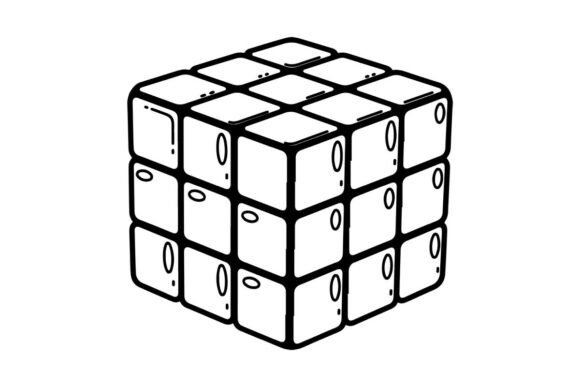
3D White Dice Cube Rolling Vector Illust
When I sit down to evaluate a new machine embroidery design, my first instinct is always practical. I don’t just look at the image; I look at how it will behave under the needle. Today, I am looking at the 3D White Dice Cube Rolling Vector Illust. On the surface, it appears to be part of a broader category of Illustrations and Graphics that often blur the line between digital art and stitch-ready assets. The description highlights "clean, bold line art" and a "calming escape," which suggests a design focused on clarity rather than chaotic detail. But does that translate well when converted into thread?
First Impressions: Mood and Visual Personality
The moment you load this file, the aesthetic is immediately distinct. It isn’t trying to be hyper-realistic or overly ornate. Instead, it leans into a modern, graphic style that feels both playful and structured. The concept of a rolling dice cube inherently suggests movement, chance, and luck—themes that are incredibly popular in current craft trends. For an embroiderer, the "3D" aspect of the vector illustration implies shading and depth, which can be challenging to replicate accurately in thread without creating a muddy, dense mess.
What stands out is the balance of negative space. In embroidery project planning, empty areas are just as important as stitched ones because they allow the fabric texture to breathe. This design seems to respect that rule. It doesn’t scream for attention with every millimeter filled; instead, it uses bold lines to define the shape of the dice, leaving room for the viewer’s eye to rest. This makes it a strong candidate for custom apparel where you want the design to be visible but not overwhelming.
Real-World Application: From Screen to Stitch
Let’s talk about a specific scenario. Imagine you are preparing a batch of custom embroidered tote bags for a local craft fair. You want something that appeals to gamers, students, and young adults who appreciate a bit of irony or luck in their daily carry. The 3D White Dice Cube Rolling Vector Illust fits this niche perfectly. Because the design relies on clean outlines, it translates beautifully onto canvas or cotton twill tote bags.
However, the true test lies in the execution. If you are using this as an applique design, the white dice might pop against a dark navy or black bag, creating a striking contrast. Alternatively, if you are stitching directly onto a light-colored shirt, you might need to use a backing stabilizer to prevent puckering, especially if the design includes significant fill stitch areas to create that 3D effect. I’ve found that designs described as "vector illust" often require careful digitizing to ensure the satin stitch edges remain crisp. If the digitizer wasn’t meticulous, those clean lines could turn into jagged, loose threads after washing.
This design also works exceptionally well for holiday embroidery, particularly around November and December. A dice motif pairs surprisingly well with winter themes or New Year’s Eve celebrations ("rolling into the new year"). It adds a unique twist to traditional gifts, moving away from standard snowflakes or trees and offering something more contemporary for personalized gift recipients.
Where Caution Is Required
Not every surface is created equal, and this design has limitations. I would advise against using this on small hoop sizes unless you are confident in your ability to manage tension on tiny details. Dice have pips (the dots), and while the vector illustration simplifies these, in embroidery, they become tiny clusters of stitches. On a small patch or a cap front, these dots can merge together, losing their definition entirely.
Furthermore, consider the fabric texture. While the design looks great on smooth cottons and poly-blends, it may struggle on heavily textured fabrics like chunky knits or bouclé. The stitch density required to make the "3D" effect visible might get lost in the weave, resulting in a flat, indistinct shape. Stretchy fabrics like jersey knit are another risk factor. Without proper hooping techniques and tear-away stabilizers, the rolling motion of the dice shape could distort during stitching, making the cube look skewed rather than dynamic.
Impact on Product Value and Brand Consistency
For Etsy sellers and small shop product creators, visual appeal directly impacts conversion rates. A well-executed embroidery design signals professionalism. When a customer sees a crisp, clearly defined dice cube on a sweatshirt or baby onesie, it suggests quality control. The "calming" nature of the design, as mentioned in its description, can actually be a selling point for parents looking for nursery decor or baby items. It offers a soft, non-aggressive visual that fits well in a child’s room, perhaps as part of a game-themed bedding set.
The versatility of this asset also extends to digital product previews. Even if you aren’t selling the physical item, having a high-quality mockup of this design on various products—like aprons, tea towels, or pillow covers—can help you gauge its marketability before investing in production time. The bold lines ensure that even in thumbnail images on social media, the design remains recognizable. This is crucial for brand consistency; you want your customers to instantly recognize your style, and a clean, graphic icon like a dice cube helps establish that identity.
Practical Designer Notes for Success
If you decide to incorporate the 3D White Dice Cube Rolling Vector Illust into your workflow, follow these steps to ensure a professional result:
- Test on Scrap Fabric: Always run a test stitch on the exact fabric you plan to use. Check how the white thread interacts with the background color. If the background is off-white or cream, you may need to add a subtle shadow stitch or change the thread color to maintain contrast.
- Check Stitch Density: Review the digitization for any overly dense areas. If the fill stitches are too tight, the fabric will pucker. Look for balanced running stitch accents that break up larger filled areas.
- Verify Hoop Size: Ensure the design dimensions fit comfortably within your intended hoop size, leaving enough margin for hooping stability.
- Inspect Small Details: Zoom in on the pips. Are they large enough to stitch cleanly? If not, consider simplifying them or using a different technique, such as appliqué, for better definition.
- Confirm Licensing: Before listing any finished items on Etsy or other platforms, double-check the license terms. Some digital embroidery files are for personal use only, while others allow commercial sales. Misunderstanding this can lead to legal issues.
- Use Proper Stabilizer: Depending on the garment type, use cut-away stabilizer for durability, especially for items that will be washed frequently, like tote bag design projects or sweatshirt embroidery.
Final Verdict
The 3D White Dice Cube Rolling Vector Illust is a solid addition to any designer’s library, provided you understand its strengths and weaknesses. It excels in projects that benefit from clean, graphic imagery and moderate complexity. It is less suitable for highly detailed, miniature work or extremely textured surfaces. By treating it with the same care you would give any premium embroidery file, you can create handmade product lines that feel cohesive, professional, and commercially viable. Whether you are making a single personalized gift or scaling up for a boutique brand, this design offers a versatile foundation for creativity.