Carrot Laser Engrave File Graphics for Laser Engraving
As someone who spends half their day staring at a computer screen and the other half wrestling with vinyl, heat press settings, or laser focus distances, I am always skeptical of new digital assets. We have all been there: you buy a trendy design, download it, and then spend twenty minutes trying to untangle the layers only to realize the lines are too thin for your Cricut or the resolution is too low for clear sublimation printing. That is why I decided to put the Carrot Laser Engrave File through its paces in my actual workflow. I wanted to see if this asset could genuinely support a real handmade business scenario, specifically for a seasonal collection targeting spring markets and Easter shoppers.
First Impressions and Visual Personality
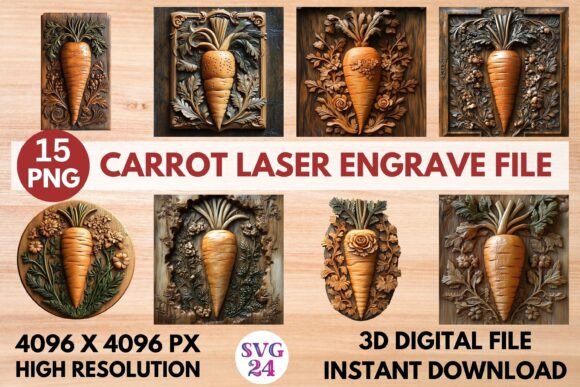
When I first opened the preview for the Carrot Laser Engrave File, the immediate mood that struck me was cozy yet playful. It does not feel like a stiff, corporate illustration. Instead, it has a rustic charm that fits perfectly into the current trend of farmhouse chic and garden-to-table aesthetics. The 3D aspect mentioned in the description suggests depth, which is crucial when you are trying to make a flat digital file pop on a physical product. For a crafter, this means the design likely holds up well under the beam of a laser engraver or the pressure of a cutting machine without losing its character.
The style leans towards decorative and premium. It feels appropriate for a boutique brand that wants to stand out on Etsy or at a local craft fair. It is not overly cute in a childish way, nor is it too minimal to be ignored. It strikes a balance that appeals to hobby makers and serious small business owners alike. If your shop focuses on home decor, textile prints, or fashionable clothes with nature-inspired themes, this graphic design asset fits right in. It suggests a buyer who values quality, natural elements, and thoughtful design details.
Real-World Crafting Applications
In my recent project planning, I imagined using this design for a batch of custom gifts. Here is how the Carrot Laser Engrave File translates across different mediums:
- Laser Engraving on Wood: This is perhaps the strongest use case. The 3D effect works beautifully when burned into wood slices, cutting boards, or wooden signs. The contrast between the engraved lines and the natural wood grain enhances the rustic vibe. It is perfect for kitchenware branding or decorative wall art.
- Sublimation and Textile: For t-shirt design and tote bags, the PNG version offers transparency that makes layering easy. You can place the carrot graphic on earth-toned fabrics like olive green, terracotta, or cream linen. It works as a standalone print or as part of a larger pattern repeat for fabric.
- Cricut and Silhouette Projects: If you are cutting vinyl, the file allows for clean cuts on tumblers and mugs. It is ideal for creating personalized drinkware for spring gatherings. The shapes are distinct enough that even intricate details remain visible after cutting and weeding.
- Printable Design and Stationery: This asset is versatile enough for greeting cards, gift tags, and planner pages. Imagine a set of thank-you cards for your handmade business orders featuring this design. It adds a personal touch that customers appreciate and often share on social media.
- Home Decor and Tableware: You can use the design for ceramic mugs, plates, or coasters. The "tableware" mention in the product description hints at its adaptability. A subtle carrot motif on dinnerware can add a whimsical touch to family meals or party favors.
Where This Asset Shines
The Carrot Laser Engrave File excels in scenarios where you need a focal point that conveys freshness and growth. It is particularly effective for seasonal craft bundles, such as Spring Cleaning kits, Gardening starter sets, or Easter baskets. As a digital product, it serves as a high-value addition to a design bundle because it bridges the gap between rustic and modern styles.
For handmade sellers, this graphic supports strong small business branding. It helps create a cohesive look across your shop collections. Whether you are selling printable designs or physical goods, the consistency of using this asset helps build recognition. It also works well for product mockups, allowing you to showcase your items in a lifestyle setting that resonates with target buyers.
Technical Considerations and Careful Usage
While the design is robust, no single asset is perfect for every situation. There are specific areas where you must exercise caution to ensure professional results.
First, avoid using the design for very small cutting details. If you plan to make tiny sticker sizes or intricate layered vinyl projects with multiple colors, the fine lines might become difficult to weed or may lose definition. Always check the SVG lines before sending them to your cutter. If the lines are too thin, consider simplifying the layout by removing some internal details or thickening the strokes in your design software.
Second, be mindful of crowded compositions. When placing this graphic on busy backgrounds or combining it with other elements, ensure there is enough negative space. The 3D effect relies on clarity; if it is surrounded by too much text or competing graphics, the impact is diminished. For laser engraving, test the power and speed settings on scrap material first to prevent burning out the finer details.
Third, color contrast matters. On dark products, the design needs to be bright or outlined to stand out. On white products, it should have sufficient depth or shadow to avoid looking flat. Always preview the PNG transparency against the actual background color of your product before finalizing the order or listing.
Practical Crafter Notes for Success
To get the most out of this graphic design asset, follow these practical steps:
- Test Before Selling: Never assume a file will work perfectly on the first try. Create a sample product to check alignment, color accuracy, and cut precision.
- Check Resolution: For sublimation design, ensure the PNG is high-resolution (at least 300 DPI) to avoid pixelation on large prints.
- Font Pairing: When adding text, pair the carrot graphic with complementary fonts. A serif font can enhance the rustic feel, while a script font adds elegance. Avoid overly bold display fonts that might overpower the delicate nature of the illustration.
- Mockup Testing: Place the design on real mockups of mugs, shirts, and signs. See how it scales. Resize it for different products to find the optimal dimensions.
- Commercial Licensing: Confirm your commercial license before using this asset for customer orders. Most platforms require a specific license for handmade business products and print-on-demand services. Ensure you are compliant to protect your Etsy product listings and creative marketplace presence.
Ultimately, the Carrot Laser Engrave File is a valuable tool for any crafter looking to expand their seasonal offerings. It provides a ready-to-use solution that saves time on design while delivering a professional result. By understanding its strengths and limitations, you can integrate it seamlessly into your Cricut projects, Silhouette projects, and broader handmade business strategy. Whether you are preparing for a craft fair or updating your online store, this asset offers the versatility needed to create engaging, high-quality products that resonate with buyers.