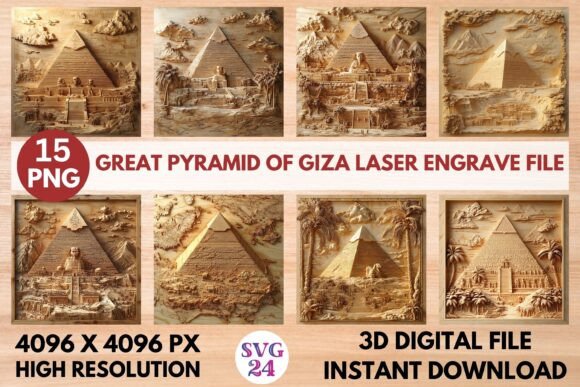
Great Pyramid of Giza Laser Engrave File
When I pull a new design file into my embroidery software, I am rarely impressed by the thumbnail alone. As a designer who reviews files for both personal studio work and client projects, I look for structural integrity, visual balance, and commercial viability. Today, I am evaluating the Great Pyramid of Giza Laser Engrave File. While the title suggests a graphic intended for laser engraving on wood or acrylic, its conversion potential for textile applications is significant. This review focuses on how this specific graphics asset translates when interpreted through needle and thread, particularly for those looking to create high-end custom apparel, boutique home decor, or distinct embroidered patches.
First Impressions: Visual Weight and Historical Gravity
The moment you open the source image, the geometric precision of the Great Pyramid commands attention. Unlike organic motifs such as florals or landscapes, architectural subjects like this require a steady hand and precise digitizing. The mood it creates is one of stability, history, and timeless elegance. For an embroidery project, this translates to a design that feels substantial. It does not feel fleeting or trendy; it feels permanent.
In terms of layout, the triangular form offers excellent versatility. It anchors well on chest placements for sweatshirt embroidery or centered perfectly on the front panel of a canvas tote bag design. The visual personality is bold yet minimalist, which is exactly what modern consumers look for in handmade products. It avoids clutter, allowing the shape itself to serve as the primary focal point. This makes it an ideal candidate for commercial embroidery where brand consistency and clean aesthetics are paramount.
Real-World Application: From Digital Asset to Finished Product
To truly understand the value of this file, we must look at it in action. Imagine you are preparing a collection for an upcoming craft fair or refreshing your Etsy listings with travel-themed merchandise. You select the Great Pyramid of Giza Laser Engrave File and begin the digitizing process. Here is how it performs across various product categories:
- Apparel and Caps: When placed on a structured cap or the back of a denim jacket, the pyramid’s sharp lines cut through the fabric texture beautifully. It works exceptionally well as a subtle statement piece rather than a loud graphic. For custom apparel, this design elevates the garment from basic to boutique.
- Home Decor and Textiles: On linen tea towels or pillow covers, the design adds a sophisticated touch. The contrast between the smooth stitches and the natural weave of the fabric enhances the "handmade" appeal. It fits seamlessly into nursery decor or adult living spaces alike, bridging the gap between playful and professional.
- Accessories and Gifts: A small, detailed version of this design on a leather patch attached to a backpack or a personalized gift box lid creates a high perceived value. Customers associate historical landmarks with quality and heritage, which subconsciously boosts trust in your craft business.
The adaptability of this digital embroidery file is its strongest selling point. Whether you are creating a large-scale wall hanging or a tiny accent on a baby onesie, the geometry holds up. It allows for creative freedom in thread selection, enabling designers to play with metallics for a luxurious look or matte cottons for a rustic vibe.
Technical Considerations for Embroidery Designers
While the source is labeled as a laser engrave file, converting it for machine embroidery requires careful attention to stitch types. Because the original is likely a solid vector or raster image, the digitizer must decide how to represent the facets of the pyramid. A combination of fill stitch for the main body and running stitch for outlining can provide depth. However, over-stitching can lead to puckering, especially on thinner fabrics.
For those aiming for a textured, almost 3D effect, incorporating satin stitch borders can define the edges sharply against the background. This technique is particularly effective on dark fabric backgrounds, where light-colored threads will pop dramatically. Conversely, using tonal threads on matching fabric creates a subtle, tonal relief that appeals to minimalist tastes.
Where Caution Is Required
No design is without its challenges. There are specific scenarios where the Great Pyramid of Giza Laser Engrave File may struggle if not handled with expertise:
- Small Hoop Sizes: If the design is scaled down too much, the internal details may become muddy. In very small hoops, the distinction between the pyramid’s layers might be lost, resulting in a blob-like appearance rather than a structured monument.
- Textured and Stretchy Fabrics: Knits, jersey materials, or heavily textured linens can distort straight lines. Without proper stabilizer support, the tension of the stitching may cause the pyramid to warp or pucker, ruining the crisp aesthetic.
- Dense Stitch Areas: Solid fills can create stiff areas on garments. For items that need to remain soft and wearable, such as baby embroidery items or lightweight summer tees, excessive density should be avoided. Digitizers should opt for lighter fill patterns or negative space techniques.
- Curved Surfaces: Applying this rigid geometric design to curved surfaces like baseball caps requires careful hooping and possibly custom stabilization to prevent distortion at the corners.
Strategic Advice for Sellers and Makers
For Etsy sellers and small shop owners, the key to success lies in presentation and preparation. Before committing to bulk production, always test the design on scrap fabric. Check the thread color contrast under different lighting conditions. Inspect the small details to ensure they remain legible after washing. It is also wise to test the design in black and white mockups to verify that the composition works regardless of color.
Consider the end-user experience. A personalized gift featuring this landmark is often purchased for travelers, history buffs, or parents wanting meaningful decor. Highlighting the craftsmanship in your product descriptions—mentioning the precision of the stitch work and the quality of the materials—can justify premium pricing. Ensure you have confirmed licensing rights before selling finished items or offering this as a printable mockup for other designers.
Final Verdict
The Great Pyramid of Giza Laser Engrave File is more than just a graphic; it is a versatile foundation for high-quality embroidery designs. Its strong geometric presence and cultural recognition make it a powerful tool for branding and storytelling in handmade goods. By approaching it with technical care regarding stitch density, fabric choice, and stabilization, designers can transform this digital asset into a stunning physical reality. It is a reliable choice for anyone looking to add a touch of ancient grandeur to their modern craft business offerings.