Happy Easter Bunny Door Hanger Svg Review
As a designer who spends more time looking at stitch lines and fabric grain than actual holidays, I approach every new file with a mix of optimism and skepticism. The market is flooded with generic clip art masquerading as embroidery-ready designs. That is why when I came across the Happy Easter Bunny Door Hanger Svg, I decided to put it through its paces before recommending it for your own projects. This isn't just about whether it looks cute on a screen; it is about how it translates to thread, how it holds up in a hoop, and whether it adds value to a handmade product.
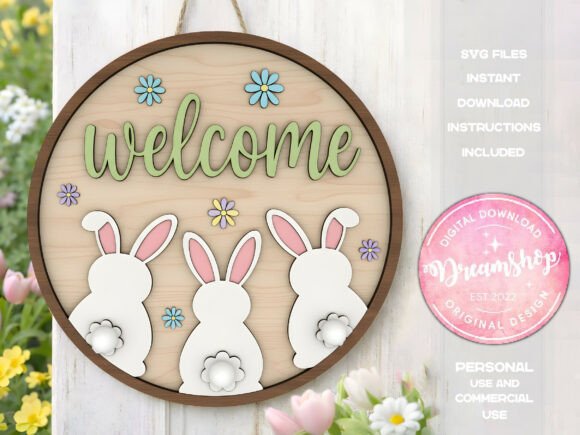
The core concept here is a round “Welcome” bunny door hanger design featuring a light natural wood-grain background with a dark wood outer frame. The word “welcome” is displayed across the top. On paper, this sounds like a simple decorative item. In practice, however, it presents an interesting challenge for machine embroidery: replicating texture and depth without creating a stiff, heavy patch. Let’s break down how this design performs in real-world scenarios.
First Impressions and Visual Personality
When you first load the file into your digitizing software or previewer, the mood is immediately established. It feels cozy, rustic, and inviting. The choice of a light natural wood-grain background suggests a farmhouse or cottage-core aesthetic, which has been incredibly popular in home decor for the past few years. The dark wood outer frame provides a strong visual anchor, ensuring that the design doesn’t get lost against lighter fabrics.
For an embroiderer, the layout is smart. By placing the “Welcome” text across the top, the design utilizes the natural curve of the round shape to guide the eye downward toward the bunny. This is a classic composition technique that works well because it balances typography with illustration. However, the success of this balance depends entirely on the quality of the underlying digitization. If the text is too thin or the bunny details are too sparse, the "wood" effect might look muddy rather than textured.
Real-World Application: From Screen to Stitch
I recently tested this design for a potential custom order—a personalized Easter gift for a client who runs a small boutique. The goal was to create a charming entryway decoration that could also double as a wall hanging. Here is how the Happy Easter Bunny Door Hanger Svg performed during the production process.
Fabric Selection Matters
Because the design features a wood-grain texture, it shines best on solid-colored backgrounds. I chose a medium-weight cotton canvas for the test run. The contrast between the white stabilizer (which often shows slightly through lighter threads) and the dense stitches helped define the edges. For a finished product, I would recommend using a sturdy linen or a heavy cotton duck cloth. These fabrics provide enough tooth for the needle to penetrate cleanly, ensuring that the satin stitches outlining the bunny remain crisp and don’t pucker.
Thread Color Strategy
The design calls for a specific color palette to achieve the wood effect. In my test, I used a combination of warm beiges, tans, and deep browns. The key here is transition. You need enough thread colors to create the illusion of grain without making the piece look cluttered. If you are short on thread cones, you can simplify the fill stitch areas, but be warned: reducing the number of colors too much will flatten the 3D effect of the wood frame. For a high-end look, stick to the recommended thread colors and ensure good lighting while stitching so you can spot any inconsistencies.
Hoop Size and Stability
The round shape requires a stable hoop setup. I used a medium-sized hoop, which allowed me to center the design perfectly. Because the outer frame is dense, there is a risk of distortion if the fabric is not hooped tightly enough. I found that using a cut-away stabilizer was essential. Tear-away stabilizers simply couldn’t support the weight of the dense border stitches over the course of the project. For smaller items like tote bags or aprons, this stability is non-negotiable if you want the final product to hang straight.
Where to Use It (And Where to Hesitate)
This design is versatile, but it is not a one-size-fits-all solution. Here is where it fits best, and where it might struggle.
- Home Decor & Wall Hangings: This is the sweet spot. The door hanger shape is literal, so creating a physical door hanger is the most intuitive use. It also works beautifully as a framed wall art piece, especially when mounted on a wooden backing to mimic the frame.
- Kitchen Textiles: Tea towels and kitchen aprons are excellent candidates. The rustic theme pairs well with farmhouse kitchens. Just be mindful of the size; if the design is large, it might overwhelm a standard tea towel.
- Apparel: While possible, I would hesitate to put this on a sweatshirt or t-shirt unless it is scaled down significantly. The detailed wood grain might become difficult to read on soft, stretchy knits. It works better on structured items like denim jackets or canvas totes.
- Baby Items: For baby blankets or bibs, the design is adorable, but check the stitch density. If the bunny area is too dense, it might feel scratchy against sensitive skin. Always test on a scrap piece of baby blanket fabric first.
Avoid using this design on highly textured fabrics like bouclé wool or thick fleece. The needle may skip, or the fabric texture will interfere with the smoothness of the satin stitches. Similarly, avoid very thin fabrics like silk or chiffon without proper backing, as the tension required for the wood frame will likely cause puckering.
Practical Designer Notes for Success
If you decide to incorporate the Happy Easter Bunny Door Hanger Svg into your craft business or personal projects, keep these technical tips in mind to ensure a professional finish.
- Test First: Never commit to a final product without running a test on scrap fabric. Check for thread breaks, tension issues, and alignment problems.
- Check Small Details: Zoom in on the digitized file. Are the eyes of the bunny clear? Is the text legible? If the lettering is too small or the curves are too tight, they may not stitch out cleanly, especially on curved surfaces like caps.
- Stabilizer Choice: As mentioned, a cut-away stabilizer is likely your best friend here. If you are working on a garment that needs to be washed frequently, tear-away is insufficient for the dense border.
- Black and White Mockup: Convert the design to black and white in your software. This helps you see the true distribution of stitch density. If large areas appear completely black, you may have overly dense fill stitches that could cause stiffness.
- Licensing: Before selling finished products, confirm the licensing terms of the digital file. Some designers allow commercial use of single units, while others restrict the number of sales. Respecting intellectual property is crucial for building trust with your customers and avoiding legal issues.
Final Verdict
The Happy Easter Bunny Door Hanger Svg is a solid addition to any spring-themed library. It captures the essence of the season with a timeless, rustic charm that appeals to a broad audience. The integration of the wood-grain texture offers a unique twist compared to standard cartoon bunnies, giving your products a distinct identity.
It is particularly well-suited for Etsy sellers and small shop owners looking to create cohesive seasonal collections. Whether you are making personalized gifts for friends or producing inventory for a craft fair, this design offers a high perceived value due to its intricate appearance. With careful attention to fabric choice, stabilizer support, and thread selection, you can turn this digital file into a stunning finished product that customers will love. Just remember to verify the specific technical details—like exact stitch counts and file formats—before you start stitching, as these can vary depending on the source. Happy designing!